

AI Security & LLM Security Consulting
Defend with AI, defend against AI-driven attacks, and protect AI itself, across all three domains
Now that generative AI and LLMs sit at the core of business, the premises of security have changed. Attackers and defenders alike have started using AI, and attacks are automated and scaled at machine speed. AI risk has become an executive agenda item, not just an IT one.
This field breaks down into three domains: defending with AI, defending against AI-driven attacks, and protecting AI itself. Our core is the third. Against threats specific to AI systems such as prompt injection, RAG data poisoning, AI agent privilege abuse and Japanese PII leakage, we act as technical advisors based on diagnosis and defense with our own product LLM-Audit and on what we have faced in real development and operations.
AI Security
Defend with AI, prepare for AI-driven threats, and protect AI itself — across all three domains
"AI and security" is no longer a single conversation.
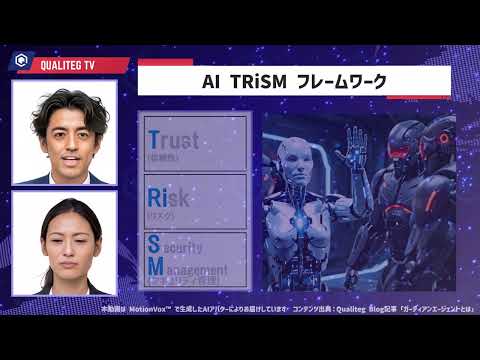
Now that generative AI and LLMs sit at the core of business operations, the very premise of security has shifted. Where the focus used to be "how to prevent intrusion," today both attackers and defenders have started using AI, and attacks are being automated and scaled at machine speed. As Gartner highlights with AI TRiSM (AI Trust, Risk and Security Management), managing the trust, risk, and security of AI in an integrated way has become an agenda not just for IT departments, but for executive leadership.
This domain breaks down into three areas: (1) using AI to defend — "Defend with AI", (2) defending against attacks that use AI — "Defend against AI-powered attacks", and (3) protecting the AI systems themselves — "Defend AI". Depending on "who uses the AI" and "what is being protected," the necessary measures, budget, and nature of risk differ completely. We have followed the third area (Defend AI) from early on, developing our own attack-and-defense diagnostic product LLM-Audit, which tests LLM-specific attacks and defenses such as prompt injection and jailbreaks. Rather than offering generic talk or checklists, we map out "where, what, and how far to protect" together with you, based on your actual AI usage, and design realistic security that can be implemented.
The Three Domains of AI Security
(1) Defend with AI
- AI analysis of massive logs and alerts (AI-SOC)
- Threat prioritization and anomaly detection
- Guardian Agents (AI protecting AI)
- Visibility and control over "who accessed which AI with what"
(2) Defend against AI-powered attacks
- AI-generated phishing and fraudulent email content
- Deepfake voice, images, and impersonation
- Automated reconnaissance and vulnerability scanning
- Preparing for the "volume, speed, and sophistication" of attacks
(3) Defend AI — our core
- Prompt injection / Jailbreak
- RAG reference-data poisoning and context tampering
- AI agent privilege abuse and runaway behavior
- Japanese PII leakage and "invisible PII" countermeasures
- Diagnosis and defense with our own product, LLM-Audit
Three Turning Points Companies Must Prepare for Now
Of the three domains, the ones moving most rapidly right now are (2) the weaponization of AI by attackers and (3) the protection of AI systems. AI evolves fast, and "fixing it after something happens" can no longer keep up. Looking ahead to the changes coming, here are the points you should design for today.
The arrival of frontier-class open LLMs, and the need for a long-term defense plan
The most powerful AI models are approaching a level where they can discover vulnerabilities that went unnoticed for years within minutes, and automate everything from reconnaissance to building attack code. Once open-weight models (LLMs anyone can obtain) reach the same capability, that power will fall into attackers' hands as well, and the "barrier to entry" for sophisticated cyberattacks will drop sharply. What matters is not waiting to see "when it arrives," but designing in advance "what you will do when it does." Rather than one-off vulnerability assessments or ad-hoc patching, the new standard is to build AI red teaming and threat intelligence into your operations — inspecting your own organization continuously from the same AI perspective as the attacker — and to shift to a long-term defense plan that cycles through discovery, verification, prioritization, remediation, and audit.
- Operations designed on the premise of continuously updating threats
- Avoiding single-model lock-in and planning for graceful degradation
- Building an operational pipeline that can handle "a world where vulnerabilities are found in bulk"
As AI-agent-driven development becomes the norm, the attack surface changes
AI-agent-driven development and operations, exemplified by Claude Code, are rapidly becoming mainstream. AI autonomously writes code, executes commands, and communicates with the outside world — and behind that convenience lies a new attack surface that did not exist when humans reviewed every line. If the privileges granted to an agent are too broad, a single hijack can be fatal; and executing or reflecting AI output as-is can lead to unexpected destruction or data leakage. Adopting agents without designing "what, and how far, to entrust to them" turns convenience straight into risk. That is exactly why a secure AI-SDLC mindset — building security in from the start of development through operations and auditing — is indispensable.
- Indirect prompt injection via ingested code, web content, or issues (agent hijacking)
- Designing agent privileges and execution scope (least privilege, human approval boundaries)
- Supply-chain risk in AI-generated code and dependency packages
- An agent's self-report is not evidence (verification and auditing via logs)
If you run your own LLM, you must design its defense yourself
As local and open LLMs improve, more companies are standing up LLMs within their own environment (on-premises / private cloud) to keep sensitive data in-house. But "on-prem means safe" is a misconception. What you must protect is not where the model sits, but the flow of data. If you "own" your AI, you take on the responsibility of designing the defense yourself as a consistent AI governance program — applying Zero Trust principles (never trust, always verify) to LLM access, covering authentication and authorization, RAG permission design, protection of fine-tuned model weights and the inference GPU infrastructure, model poisoning countermeasures for training and inference data, and where needed, even Confidential Computing.
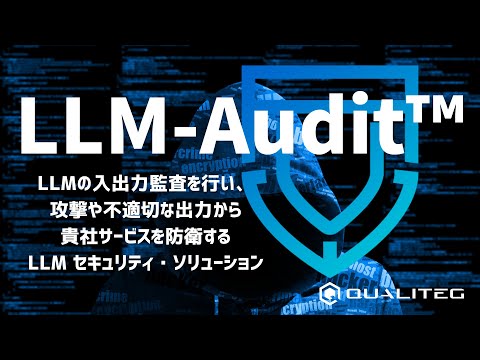
LLM-Audit
We develop and provide LLM-Audit, an LLM security diagnostic product. Drawing on the expertise gained from building it, we help strengthen the security of your LLM systems.
pii-fi
No attack can be blocked 100% of the time. That is precisely why it matters to establish, in advance, a state where "even if it leaks, the damage can be controlled." pii-fi is a product that detects personal information (PII) in the data you send to AI and thoroughly removes or anonymizes it. Even if information leaks by some chance, if no PII worth protecting remains in it, you can greatly contain the damage of the leak. It also handles Japanese-specific spelling variations and "invisible PII" hidden in documents, forming a defense-in-depth together with the detection-and-diagnosis of LLM-Audit.
Threats and Vulnerabilities We Primarily Address
LLMs and AI systems carry risks that did not exist in traditional software. From adversarial prompts to data leakage and supply-chain attacks, we respond practically to the threats we have faced in real development and operations.
Prompt injection
- Direct injection
- Indirect injection
- Jailbreak attacks
- System prompt leakage
Information leakage
- Training-data extraction
- PII (personal information) leakage
- Unintended output of confidential information
- Context leakage
Harmful output
- Harmful content generation
- Bias and discriminatory output
- Misinformation and hallucination
- Copyright infringement risk
System attacks
- DoS attacks (resource exhaustion)
- Model theft
- API key leakage
- Supply-chain attacks
Enterprise integration & access foundation
- Active Directory / ID & authentication integration
- Access control and privilege design
- Proxy-based control of AI usage (DLP)
- Company-wide AI governance and Shadow AI countermeasures
Japanese-specific risks
- Japanese alignment gap (attacks blocked in English slip through in Japanese)
- Japanese ambiguity (is "Misawa" a person's name or a place?)
- "Invisible PII" hidden in files (notes / hidden sheets / OCR)
- Confabulated prompt injection (verifying the AI's self-reports)
How We Work With You
Discovery
We listen to your LLM system architecture, usage scenarios, and your security concerns and challenges
Sharing the latest landscape
We share the latest attack techniques, industry trends, and best practices in AI security
LLM-Audit deployment support
We support the introduction and operation of vulnerability assessment using our in-house LLM-Audit
Qualiteg's Strengths
Expertise from building a product
We hold deep technical expertise in LLM security accumulated through developing LLM-Audit.
Keeping up with the latest attacks
We track newly discovered attack techniques every day and continuously update our assessment items.
Practical, implementable recommendations
Not just theory — we propose implementable measures grounded in actually operating LLM systems.
We defend with a "builder's" perspective
Because we handle everything in-house — from building and operating LLM inference infrastructure (GPU) to model development — we can design security grounded in implementation, not armchair theory. We walk alongside the real challenges of companies standing up their own LLMs.
AI Security on Video
We also explain our approach to AI security on the official Qualiteg YouTube channel.
Related Resources
On the Qualiteg Blog we publish technical articles on AI security (LLM attack & defense, Japanese PII protection, Zero Trust / AD integration).

How Is WireCanal Different from ngrok? The Developer Compares Pricing, Operations, and MCP Design
Both build on the reverse-tunnel architecture. We compare pricing models, operations and contracts, and where the tool-permission ledger for AI lives — based on each vendor's official documentation.
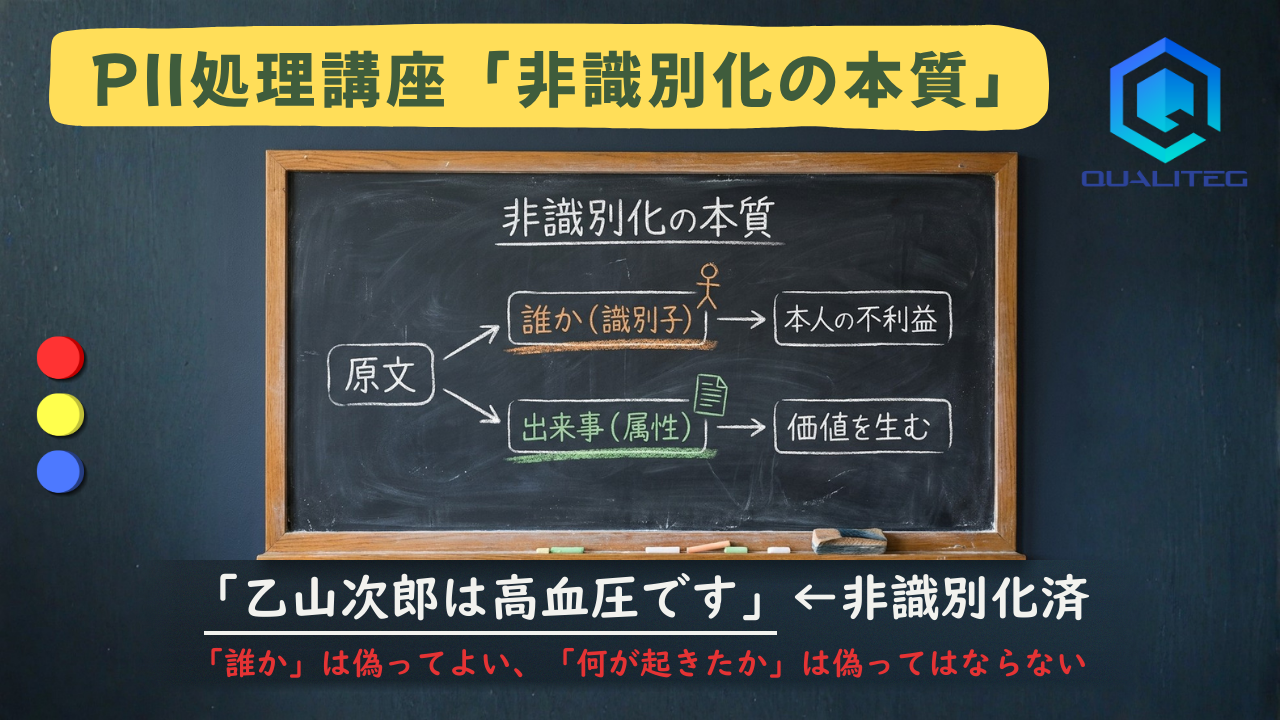
The Essence of PII De-identification — You May Falsify "Who", but Never "What Happened"
What may be falsified in masking and pseudonymization — and what must never be. Design principles for PII de-identification, from the distinction between identifiers and facts.

Data Loss Prevention in the AI Era, Part 2 — Beyond Traditional DLP: The Fundamental Challenges AI-DLP Must Solve
Why pattern-matching DLP can't cover AI-specific leakage risks, and what AI-DLP must address instead.

How AI Is Changing Both Attack and Defense — The Security Market of 2026 and the Next Decade
We organize AI and security into three domains — "Defend with AI / Defend against AI-powered attacks / Defend AI" — and look ahead to the market and corporate readiness for the next decade.

The AI Detected, Refused, and Reflected on an Attack That Never Came
We examine, from raw logs, a "false recognition" in prompt-injection detection — the AI confabulating an attack that never happened.

Foundational Tech Behind Enterprise AI Security — Active Directory, Part 6: Common Problems and Solutions
Even with seemingly perfect settings, "it just won't work" moments are inevitable in the field. Kerberos failures, clock skew, SPN misconfigurations, DNS issues and more — all solvable with systematic troubleshooting.

What the Confusion Matrix Misses in PII Detection — Cross-Recognizer Collisions and Integration Testing
Automatic PII detection is the problem of extracting expressions from text and judging which PII type they are. We cover why unit tests alone give a false sense of safety.

Foundational Tech Behind Enterprise AI Security — Active Directory, Part 5: Browser Settings and Authentication
Following Part 4, where we covered identifying "who" accessed ChatGPT or Claude by joining the proxy server to the domain, this article explains browser settings and authentication.

Why Has Enterprise Security Become So Complex? — From the AD+Proxy Era to Modern Cloud Support
A history of enterprise security from the firewall & proxy era through SASE/SSE, and how it applies to LLM security.

Foundational Tech Behind Enterprise AI Security — Active Directory, Part 4: Proxy Servers and Integrated Windows Authentication
We explain integrating proxy servers with Kerberos authentication to monitor access to ChatGPT and Claude.

Foundational Tech Behind Enterprise AI Security — Active Directory, Part 3: Joining the Domain
The procedure for joining client PCs and servers to a domain, and the mechanics behind it.

Foundational Tech Behind Enterprise AI Security — Active Directory, Part 2: Building the Domain Environment
A detailed walkthrough of building an Active Directory domain environment for an AI security validation lab.

The Complete Guide to LLM Security in the Zero Trust Era: Toward the Evolution into Guardian Agents
We discuss three transformations: Zero Trust, LLM security, and the Guardian Agent of the AI agent era.
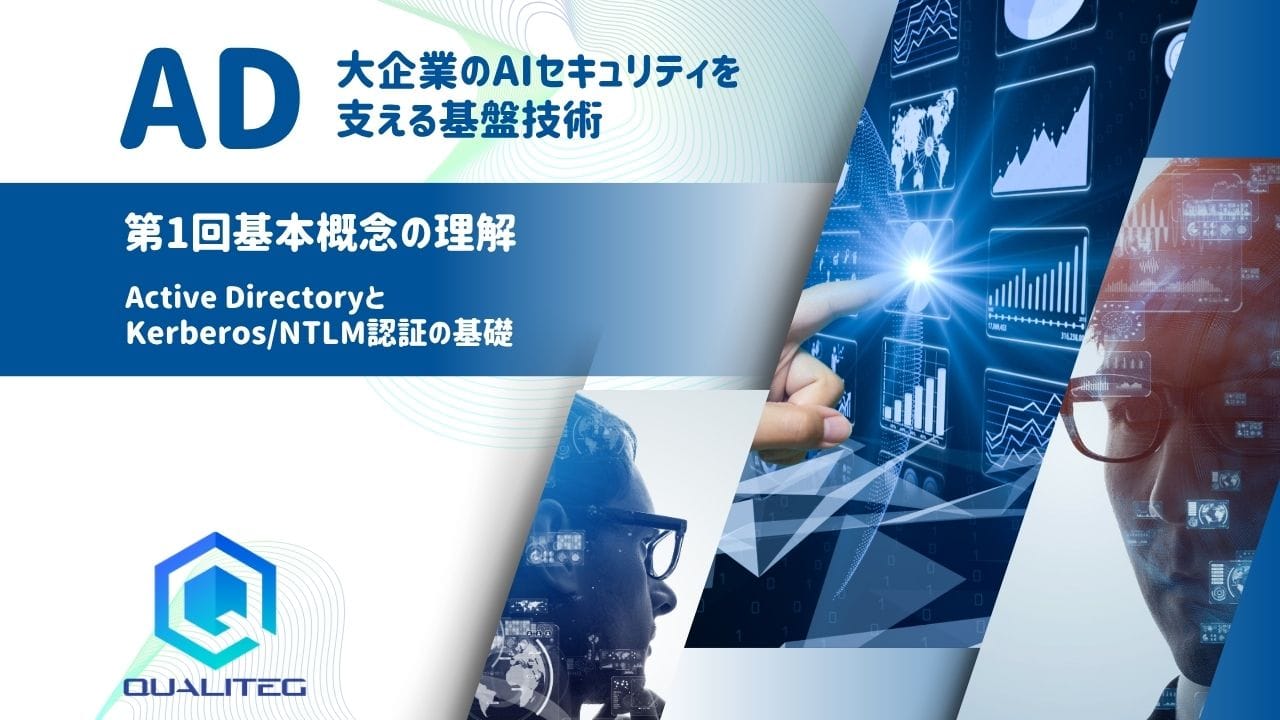
Foundational Tech Behind Enterprise AI Security — Active Directory, Part 1: Understanding the Basics
The fundamental concepts of Active Directory for integrating AI security solutions with the enterprise environment.

Data Loss Prevention in the AI Era, Part 1 — AI DLP and PROXY
HTTPS interception — how it works, where it breaks, and how to design AI-era data loss prevention around it.

What Is a "Guardian Agent," the New Sentinel of the AI Agent Era?
We explain Gartner's concept of the Guardian Agent and the new kind of watchdog required in the AI agent era.

Progressive PII Masking in LLM Use
How to detect PII hidden in files, and progressive masking with the LLM-Audit PII Protector.
Defending Enterprise Information in the LLM Era: The New Challenge of PII Security
A new definition of PII security for the generative AI era, and the information-defense strategy companies should adopt.
LLM-Audit — The Front Line of LLM Attack and Defense
The features of our LLM security solution "LLM-Audit" and countermeasures against LLM-specific vulnerabilities.

[LLM Security] Llama Guard: A First Step in AI Safety
The characteristics of Meta's Llama Guard and its safeguard functions for LLM input and output.
Frequently Asked Questions
Where should we start with AI security?
Because who uses AI and what must be protected change both the measures and the budget, we first locate your issue among the three domains. The two areas moving fastest are attackers adopting AI and protecting AI systems, and neither can be handled by fixing things after they happen.
How do you approach prompt injection countermeasures?
We diagnose direct and indirect injection, jailbreaks and system prompt leakage, and design defenses. In agent-driven development we also cover takeover through indirect prompt injection via ingested code, web content and issues. We practice diagnosis and defense with our own product LLM-Audit.
Is running an LLM on-premises enough to be safe?
Believing on-premises equals safe is a misconception. What must be protected is the data flow, not where the model sits. A company that owns its LLM takes on the responsibility of designing authentication and authorization, RAG permission design, protection of fine-tuned model weights and inference GPU infrastructure, and model poisoning countermeasures as one consistent AI governance.
Are there risks specific to Japanese-language systems?
Yes. Examples include the Japanese alignment problem where attacks blocked in English pass in Japanese, ambiguity such as whether "Misawa" is a person or a place, invisible PII hidden in notes, hidden sheets and OCR output, and confabulated prompt injection that occurs when AI self-reports are not verified.
Can we also consult you on Active Directory integration and company-wide AI usage control?
Yes. We support enterprise integration: Active Directory and identity/authentication integration, access control and permission design, AI usage control through proxies (DLP), and company-wide AI governance including shadow AI countermeasures.
CONTACT
Contact Us
For questions or consultations about AI Technology Consulting,
please feel free to contact us.