

Claude Code Adoption & Enablement
Beyond "somewhat handy": reproducible, team-wide development capability
You rolled out Claude Code, but usage and results vary by person. Context "rots" over long tasks and accuracy drops. Nothing carries over between sessions, so every session starts the research from zero. The problems that appear after adoption look alike in every team.
Knowing development processes from embedded software to large enterprise applications, we went all-in on agent-first coding, deployed Claude Code and other AI coding agents in commercial development, and systematized what works and where it breaks. Rather than tool tricks, we transplant into your team the know-how of rebuilding the development process itself around agents.
Claude Code Enablement
Field-tested know-how from a team that has gone all-in on "agent-first" development — from embedded software to large-scale systems
Don't let Claude Code stay merely "kind of handy." Turn it into reproducible engineering capability for your team.
Having mastered development processes at every scale — from embedded software to large-scale enterprise applications — we have committed fully to agent-first coding. We put Claude Code and other AI coding agents into real commercial development, and we have systematized what works and where the pitfalls are. This is not about superficial tool tricks; it is about rebuilding the development process itself to be agent-first — and we transplant that know-how directly into your team.
Advisory Areas
Context & Memory Design
- CLAUDE.md and context design
- Early signs of "context rot" and how to handle it
- Operating a 1M context without "using it all up"
- Memory and summarization strategy
Cross-Session Development
- Handing off tasks that don't finish in one session
- Designing for state and context carry-over
- Coping with memory loss between sessions
- Operating handover documents
Git & Change-Management Discipline
- Branching and naming conventions
- Commit-message practices
- Merge rules and review workflow
- Cleaning up the branches agents mass-produce
Quality Assurance & Safety Settings
- Automated verification via browser E2E
- Review process and quality gates for AI-generated code
- Prompt-injection countermeasures
- Permission (bypass) modes and hook configuration
Multi-Agent & Parallel Execution
- Dividing roles between a coordinator and sub-agents
- Controlling parallel tasks
- Designing per-task worker spawning
- Orchestration
Operations, Cost & People
- Monitoring rate limits and LLM cost
- Detecting runaway and zombie processes
- Turning routine work into recipes
- Growing people who can "supervise" AI
Inquiries We Handle
- We adopted Claude Code, but usage and results vary by person — we want to standardize it across the team
- We want design guidelines for CLAUDE.md, context, and memory, and to establish operations that don't "use up" the 1M context
- On long tasks the context "rots" and accuracy drops — we want to get splitting, summarization, and session design right
- We want to establish handovers for development that doesn't finish in one session
- We want to build review and quality assurance — including browser E2E — for AI-written code
- We want safe settings for prompt injection, permissions (bypass), hooks, and more
- We want to understand the causes and workarounds for real-world errors such as "The model's tool call could not be parsed" and "Usage Policy" violations
- We want best-practice training in agent-first development for our engineering team
Know-How We Can Provide (Examples)
We have rebuilt our own development to be agent-first and use Claude Code intensively in day-to-day commercial development. When issues arise, we dig down to the primary evidence (the jsonl the CLI records) to analyze them, and we have published our findings on our technical blog. From that hands-on experience, we can share know-how such as the following. These are examples only — we can support a wide range of needs depending on your challenges.
Operating Without Letting Context "Rot"
The latest models have a 1M-token context, but filling it to 100% just because the capacity exists actually lowers accuracy. Assuming it will start to "rot," when and how to split, what to summarize, and what to offload to memory — we share context design that doesn't break in real operation.
Cross-Session Development Discipline
Assuming memory is lost between sessions, how do you hand off tasks? We design discipline that works for a team — handover documents, state carry-over, branch/commit/merge practices, and cleaning up the branches agents mass-produce.
Causes and Workarounds for Real-World Issues
We identify the causes of issues that frequently occur in the field — "tool call could not be parsed" (caused by streaming with certain models plus extended thinking), false positives on "Usage Policy" violations, stream idle timeouts — from jsonl, and organize the workarounds.
Agent-Oriented Quality and Safety
We support automated verification via browser E2E, review processes and quality gates for AI-generated code, how to approach prompt injection (including the phenomenon of mistakenly "detecting" an attack that never came), and safe configuration of permissions (bypass) and hooks.
Designing Multi-Agent & Parallel Execution
The key points of dividing roles between a coordinator agent and sub-agents, controlling parallel tasks, and designing per-task worker spawning. We share practical patterns for orchestrating multiple agents without breakdowns.
Choosing Between CLI, Web, and Windows
We account for the strengths and weaknesses of Claude Code's CLI and Web versions, as well as Windows-specific pitfalls (e.g., "claude is not recognized" from a missing PATH entry), and propose the right choice for your use case and team environment.
Runaway and Cost (Rate Limit) Countermeasures
We detect and cut off unbounded billing from zombie processes or unexpected loops that "keep calling the LLM in the background" using LLM I/O monitoring. Including how to approach rate limits, we support an operating design where cost does not run away.
Guarding Against Crashes and Lost Work
A Claude Code crash can wipe out hours of investigation, discussion, and decisions in one go. With persistent session records (history plus an index), we design a mechanism that lets the next agent fully inherit the previous situation.
Growing People Who Can Properly "Supervise" AI
Rather than verifying AI output line by line, you need the ability to "supervise" from the perspectives of design, permissions, and review. Assuming "AI is confidently wrong," we grow people with the judgment for how much to delegate and where to stop.
Turning Routine Work into "Recipes"
We document steps that are used every time yet easily forgotten as "recipes," so anyone can reproduce the same quality. We turn a team's tacit knowledge into procedures as an asset and raise the reproducibility of agent operations.
Countering CLAUDE.md / Instruction Bloat
The more instructions bloat, the more accuracy drops. With separation of core and reference, internal splitting, and a "read only when needed" structure, we share a design that keeps CLAUDE.md effective without letting it grow fat.
Common Pitfalls (Examples)
- Context overflows on long sessions and accuracy drops (even with 1M, don't use 100%)
- Context isn't carried over between sessions, so you re-investigate from zero every time
- The gap between benchmark numbers and actual performance on your codebase
- "The model's tool call could not be parsed" (caused by streaming with certain models plus extended thinking)
- Legitimate operations get falsely flagged as "Usage Policy" violations and work stops
- "claude is not recognized" on Windows (missing PATH entry)
- Frequent stream idle timeouts
- Images drop out of the conversation ("an image could not be processed")
- Branches created by agents pile up and get in the way
- Zombie workers keep calling the LLM in the background and eat up the bill
- "False positives" in prompt injection (confabulating that an attack that never came was detected)
- CLAUDE.md bloats and, ironically, instructions stop working
— We have crushed these "pitfalls" hands-on in the field.
The Value We Provide
A Perspective That Has Mastered the Development Process
From decades on the front line of development — from embedded to large-scale enterprise — we support you based on the essence of the development process, not the fad of the moment.
Primary Know-How We Put Into Real Use Ourselves
We use Claude Code intensively in commercial development, still write production code daily, and dig down to jsonl to analyze and publish on issues. We hand you living know-how, not textbook knowledge.
Correcting Over-Expectations With Realistic Design
We won't make the glib claim that "adding AI makes you faster." We organize what works and the pitfalls to avoid with solid evidence, and propose realistic, decisive transformation.
Related Resources
We continually publish field know-how on Claude Code and coding agents on the Qualiteg Blog.
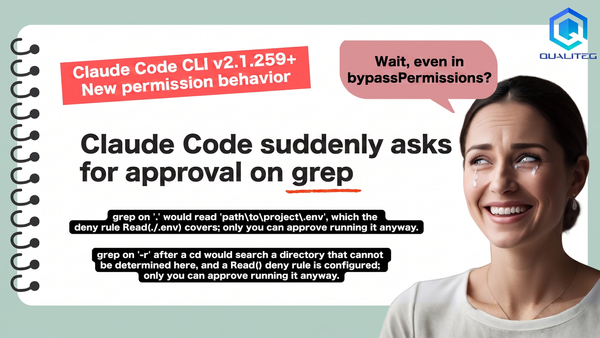
Claude Code Suddenly Asks for Approval on grep: v2.1.259 Now Applies Read Deny Rules to Bash grep
You run Claude Code in bypassPermissions, yet grep -r started waiting for approval. The cause is v2.1.259: Read deny rules in settings.json now apply to Bash grep. We measured it side by side with v2.1.258 and tabulated what passes and what stops.
The Complete Guide to Claude Opus 5.0 — Model Specifications, API, and Claude Code Best Practices
A practical, all-in-one guide to Claude Opus 5.0: model specifications, API usage, and how to run it effectively with Claude Code.
The Complete Guide to Claude Fable 5 — Model Specifications and Claude Code Best Practices from the Official Docs
Model specs, pricing, and the usage-credit activation deadline — the definitive guide to running Fable 5 in real work.

What Is "court"? The "XML Exposure" Phenomenon and Preventing Tool-Invocation Failures
An incident where tool-call XML-style tags get exposed on screen and are reported "complete" while never actually running. We explain detection, recovery, and prevention from raw logs.
The Complete Guide to Claude Opus 4.8 — Model Specifications and Claude Code Best Practices from the Official Docs
New effort defaults, Dynamic Workflows, and honesty improvements — what to revisit in workflows built for 4.7.
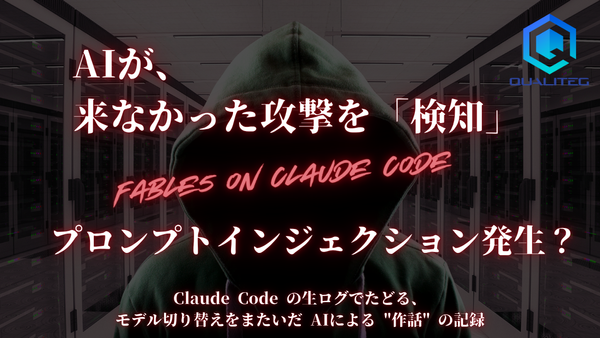
The AI Detected, Refused, and Reflected on an Attack That Never Came
A record of AI "confabulation" traced through raw logs — a study of a false positive in prompt-injection detection.
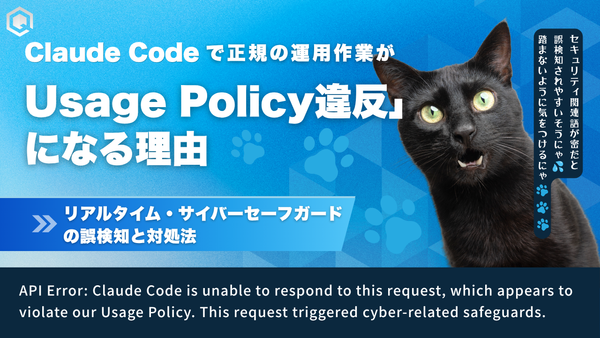
Why Legitimate Operations Get Flagged as "Usage Policy" Violations — Causes and Fixes
How false positives from the real-time cyber safeguard happen, and field workarounds.
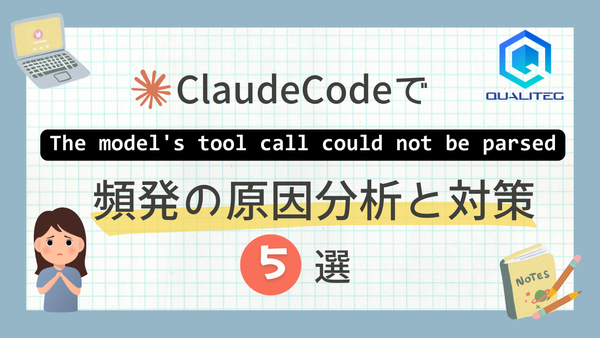
Analyzing the Frequent "The model's tool call could not be parsed" Error — Causes and Fixes
We analyze actual session logs (jsonl) to pinpoint a streaming-induced defect and share the cause and workarounds.

Coding Agents: Present and Future (Part 3) — From "AI That Writes" to "AI That Directs"
We chart the shift to development workflows using multiple agents and the changes underway on the 2026 development floor.

Installing Claude Code on Windows via irm and Fixing 'claude is not recognized'
A known installer bug skips the PATH entry — the shortest path to a working install on Windows PowerShell.
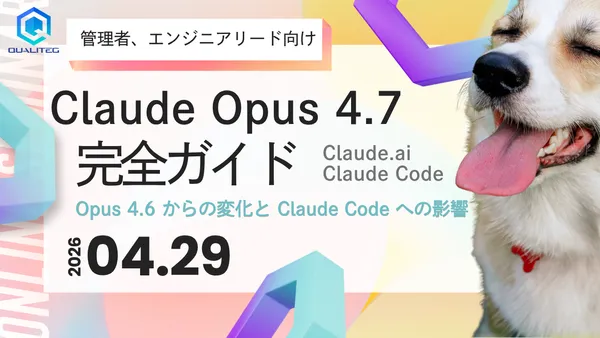
The Complete Guide to Claude Opus 4.7 — Model Specs and Practical Claude Code Know-How
We practically summarize how to get the most out of the Claude Code CLI/Web, including effort settings and changes to tool calling.
Getting Started with Claude Code
An introductory guide for newcomers, from installing the CLI and Web versions to the basics of usage.
Frequently Asked Questions
We want to standardize how our team uses Claude Code. Where do we start?
With CLAUDE.md and context design. Operating without exhausting the 1M context, memory and summarization strategy, handling the early signs of context rot, and Git discipline for branches, commits and merges, set up together, shrink the variation between people.
Handing over development that does not finish in one session keeps failing.
The keys are designing how state and context carry over and operating handover documents. Assuming memory loss between sessions, we hand you a pattern we actually run that defines what the next session reads to pick up where the last one stopped.
How do you assure the quality and safety of AI-written code?
We combine a review structure and quality gates for AI-generated code, automated browser end-to-end verification, prompt injection countermeasures, and safe configuration of permission (bypass) mode and hooks. This includes operations that verify with logs rather than trusting the agent's own reports.
Work stops on "The model's tool call could not be parsed" or "Usage Policy violation".
We share the causes and workarounds for issues that occur in practice. The former stems from streaming with the model and extended thinking, the latter is legitimate operational work being misdetected, and we also cover frequent stream idle timeouts, images dropping out of the conversation, and zombie workers burning through budget.
Can we book training only?
Yes. We deliver best-practice training on agent-first development for development teams. A free initial consultation of about one hour is available.
CONTACT
Contact Us
For questions or consultations about AI Technology Consulting,
please feel free to contact us.