

AI × IoT and Edge AI Adoption Advisory
Edge inference, generative AI device control, remote access and centralized device management
You want to analyze sensor data from factories and stores with AI, expose a Raspberry Pi PoC safely without opening ports or adding a VPN, or let an LLM operate on-site equipment in natural language. Requests to connect IoT and AI arrive in concrete forms like these.
We develop and operate WireCanal, our own tunnel service for IoT devices, and have measured setup, hardening and internet exposure on real boards such as Raspberry Pi 5 and Luckfox Pico M. We have also taken part in on-site interviews on factory automation at large manufacturers. As technical advisors we support edge-versus-cloud decisions, device control from generative AI, and remote access with centralized management, using decision material verified on real hardware.
AI × IoT
Advisory on Edge AI, AI-Driven Device Control, and Remote Access to IoT Devices
Connect your on-site devices to advanced AI — and reach them safely from anywhere.
We advise on the full picture of combining AI with IoT: feasibility of edge AI (on-device inference), controlling IoT devices from generative AI and LLMs (MCP integration), AI analysis of sensor data and camera footage including image analysis and multi-sensor analytics, remote access and monitoring without port forwarding or VPNs, and centralized management of IoT devices deployed in factories and field sites. Our guidance is grounded in hands-on testing on real hardware, from small Linux boards such as Raspberry Pi and Luckfox to GPU machines.
Advisory Areas
Edge AI / On-Device Inference
- Edge vs. cloud inference trade-offs
- Model compression (quantization) feasibility
- Inference evaluation on Raspberry Pi / Jetson-class devices
- Constraints of low-power, low-memory environments
Device Control with Generative AI
- Operating equipment from LLMs and AI agents
- MCP / function calling integration design
- Natural-language interface design
- Permission and approval design against misoperation
AI Analysis of Camera & Sensor Data
- Image analysis, video analytics with VLMs, anomaly detection
- Multi-sensor analytics combining multiple sensors
- Time-series sensor data analysis design
- Data collection pipelines and automated reporting
Remote Access & Centralized Device Management
- Tunnel-based access without port forwarding or static IPs
- Centralized management of IoT device fleets in factories and field sites
- Comparison with VPNs, NAT traversal considerations
- Automatic recovery after reboot, running as a service
Hardening IoT Devices for Exposure
- SSH key authentication and firewall design
- Authentication and access control design
- Input validation and resilience to unexpected input
- Operational monitoring and logging design
Typical Consultation Topics
- We want to analyze sensor data from factories, stores, or field sites with AI, but don't know where to start
- We built a PoC on a Raspberry Pi and want to access it securely from outside without port forwarding or a VPN
- We want to analyze camera footage with generative AI to automate anomaly detection and inspection reports
- We want to let an LLM operate and query our on-site devices in natural language (MCP integration)
- We need to compare edge inference and cloud inference in terms of cost and latency
- We want to monitor remote equipment continuously without static IPs or extending our corporate VPN
- IoT devices deployed across factories and sites are managed separately, and we want a centralized management scheme
- We are concerned about security (hardening and authentication) when exposing IoT devices to the internet
Expertise We Provide (Examples)
We develop and operate WireCanal, our own IoT-ready tunneling service, and have measured the full path from setup to hardening to internet exposure on real hardware such as Raspberry Pi 5 and Luckfox Pico M. We have also conducted on-site interviews and concept planning for factory automation at a major manufacturer. These are examples — we can support a wide range of challenges.
Real Capabilities and Limits of Small Linux Boards
From boards with 64 MB of RAM to the Raspberry Pi 5, we share measured results for setup, running as a service, and recovery after reboot — practical decision material for device selection.
AI Analysis of Images and Multi-Sensor Data
We support the design of image analysis for camera footage (including VLMs) and multi-sensor analytics that combine multiple sensors, with a focus on analysis that actually works on the factory floor — a perspective built through factory automation fieldwork.
Remote Access and Centralized Device Management
We explain tunnel-based configurations for reaching on-site devices safely over the internet without router settings or VPNs, based on real operations. Centralized management of large IoT device fleets across factories and sites can also be built with WireCanal.
Connecting LLMs to Devices and Data
From building your own MCP server to connecting it to web-based ChatGPT and Claude, we explain implementation patterns for giving generative AI safe access to equipment and data, with working examples.
Value We Provide
Knowledge from Real Hardware
Our advice is based on measurements from actually running devices — from small Linux boards to GPU machines — not desk research.
AI and Connectivity, Designed Together
Because we cover both AI model selection / inference design and device connectivity / exposure / hardening, we can advise consistently from PoC to operations.
A Realistic, Step-by-Step Approach
We propose practical steps: validate feasibility with a small PoC first, then scale it out.
Related Resources
We publish hands-on, measured articles covering IoT device setup, internet exposure, and AI integration on the Qualiteg Blog.

Driving a Servo on a Raspberry Pi Zero W from Anywhere: Headless Setup, Hardware PWM, and Publishing with WireCanal
Connecting a servo to a 2017 Raspberry Pi Zero W, setting it up headless from a Windows PC alone, fixing software PWM jitter with hardware PWM, and moving it over the internet with one curl command via WireCanal's free plan, no open ports, all measured.

Using a Luckfox Pico M from Anywhere: Putting a Public URL on a $25, 64 MB Linux Board with WireCanal
How we made a $25 Linux board reachable from the internet without adding an inbound port — SD imaging, networking, publishing, and reboot recovery, all measured.
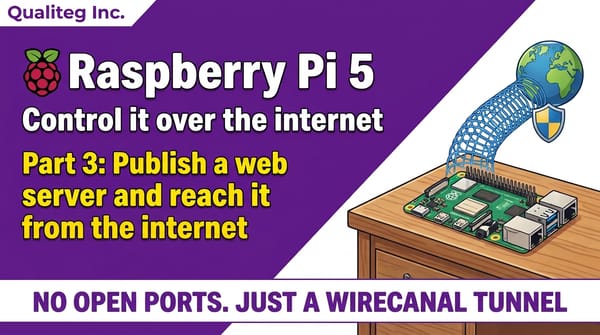
Publishing a Raspberry Pi 5 Web Server to the Internet: No Open Ports, Just a WireCanal Tunnel
Publish a Raspberry Pi 5 web server with inbound ports kept closed — no port forwarding or router settings, verified through automatic recovery after reboot.
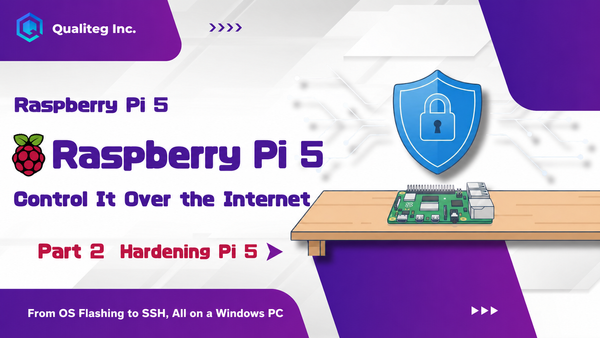
Hardening a Raspberry Pi 5: SSH keys, UFW, fail2ban — and the trap where IPv6 comes back after a reboot
Hardening with SSH key-only auth, UFW, fail2ban, and automatic updates — all verified with real commands and real reboots before exposing the device.
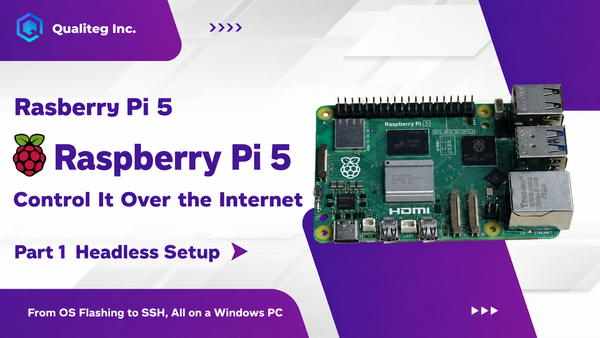
Setting Up a Raspberry Pi 5 Without a Monitor: From OS Imaging to SSH Using Only a Windows PC
Initial setup with no monitor and only a Windows PC — the full procedure with measured timings, about 3 minutes from SD card insertion to SSH.
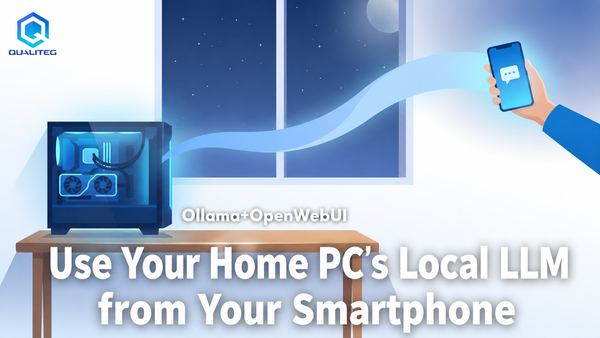
Use a Local LLM on Your Home PC from Your Phone While Out: Ollama + Open WebUI + WireCanal
Add a chat interface to a local LLM and expose it safely through a tunnel — a fully measured guide with no Docker, no WSL, and no port forwarding.
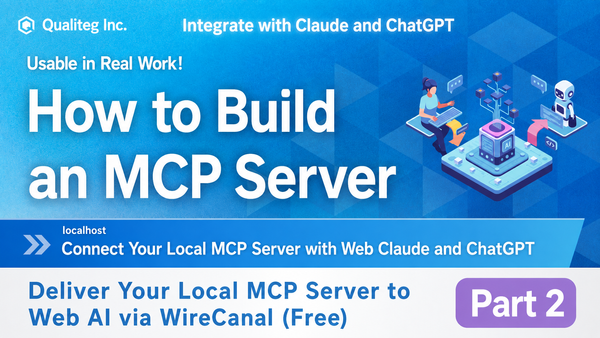
How to Build an MCP Server — Using Your Own MCP Server from Web-Based ChatGPT and Claude (Part 2)
Give a localhost MCP server a public URL and OAuth authentication, and query it from web-based ChatGPT and Claude — with real connection screenshots.
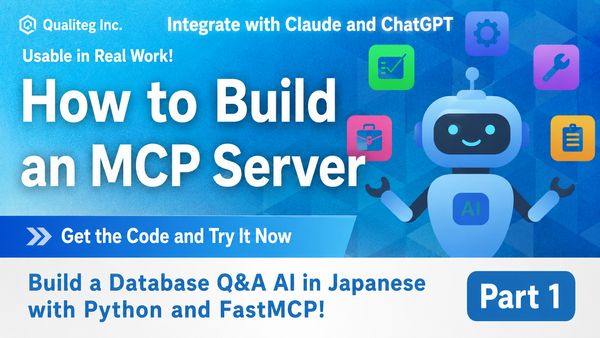
How to Build an MCP Server — Let AI Answer Questions About Your Database with Python and FastMCP (Part 1)
Build an MCP server with Python and FastMCP, and let AI take a plain-language question, write the SQL itself, and return aggregated results — with working code.
Frequently Asked Questions
Should we run AI inference at the edge or in the cloud?
We compare on cost and latency. We check how far boards like Raspberry Pi or Jetson can go, whether model compression such as quantization applies, and what the power and memory constraints are, then decide the split between edge and cloud per use case.
We want to monitor remote equipment continuously without a fixed IP or extending our corporate VPN.
A tunnel-type connection that needs neither port forwarding nor a fixed IP can do this. We explain it with operational experience, including a comparison with VPNs, NAT traversal, and a resident-service design that recovers automatically after reboot. Centralized management of many IoT devices across factories and sites can also be built with WireCanal.
Can an LLM operate devices on site?
We support designs in which LLMs and AI agents operate and query equipment through MCP or Function Calling. Alongside the natural-language interface, we always design permissions and approval steps that prevent mis-operation.
We are worried about security when exposing IoT devices externally.
Before exposure we harden the device: SSH key authentication and firewall design, authentication and access control, resistance to unexpected input with input validation, and monitoring and logging. Our blog publishes measured procedures from hardening to exposure on real boards.
CONTACT
Contact Us
For questions or consultations about AI Technology Consulting,
please feel free to contact us.